What I’m learning: Visuality as “Embodied Attention” in the Higher Education Classroom
Here I pivot a bit to incomplete thoughts and praxis in my co-learning spaces. I’ve been teaching a course since 2019 which has gone through its own evolution. I will not divulge the title, but let’s just say that its integration into the curriculum was driven by an urgency to introduce the notion of complex positionalities in humans and to provide a taste of some critical engagement with noticing local and present systems of oppression in schooling - specifically as these have structurally impacted communication and ability. And let’s ensure we situate the course in my discipline, Speech-Language Pathology, that remains largely tethered to ideas of language as ‘disordered’, and in which critical scholarship is merely in its infancy. The course is part of a sequence and it has increasingly become a container of experimentation for the notion of ‘liberated languaging’ with my co-learners - which has invited moments of discomfort, tension between the system as it exists and its “catastrophes” (the outside) with our inner landscapes (including our very own complex evolving selves and our socialized beliefs).
I’m writing this blog without a template so it may meander a bit, but I also want to center a book I’ve been reading by the great Jenni Odell (yes, again!) entitled ‘How to do Nothing’. And I’ll add some pull-out quotes that have served as exploratory vehicles helping me pause and play in my/our classroom spaces. I have to also say that some of the focus here will be more on ‘visuality’ and that this is a methodology in itself that I am still very much exploring. So I will not devote time to the method itself here. Relatedly, we have published some of our use of art-making (collaging) in a paper I’ve mentioned before (Brea-Spahn & Soto-Boykin, 2025) - in which using the concept of ‘freedom dreaming’ by Robin DG Kelley, we showed how our graduate co-learners are both disrupting colonized ideas of languaging in early chidhood and also imaginging liberatory learning spaces for children. In fact, it is the experience of co-learning with my students and my colega - la Dra Xigrid Soto-Boykin - that introduced the Reggio Emilia Approach to my list of obsessions. But, I digress…
Odell writes a lot about “attention” - its harvesting (as in how we fall prey to social media and other means) and its intentionality. She ties it to “bioregionalism,” a term/ concept she attributes to Peter Berg… And it has some to do with the notion that we are all parts of a whole (ecosystem), and how we are all needed as parts to function ‘wholistically’ (this reminds me of many dialogues I’ve read with Cornel West and his notion of ‘non-fragmentation’) . I think this is key because there is so much hyper-individualism in professionalized academic preparation. And in true Odell nature, she goes at this idea of ‘attention’ - of noticing- of witnessing- and of caring- in such a deep and layered way that I’d be writing for days here to unveil all I’ve learned (and I’m not even done with the book, yet). A number of her chapters address the idea of ‘deep listening’ as a bodily praxis and as a 'witnessing’ for understanding, and connects it to silence by quoting Gordon Hempton “silence is not the absence of something but the presence of everything’ -(we’ll come back to this because it ties into non-speaking embodiments). And here’s where she also then connects the dangers of disembodiment to our potential for our symbiotic entanglements. She writes: “as the body disappears, so does our ability to empathize” (p.24) and in her positionality as an artist she also wonders “how art can teach us new scales and tones of attention” (p. xxi).
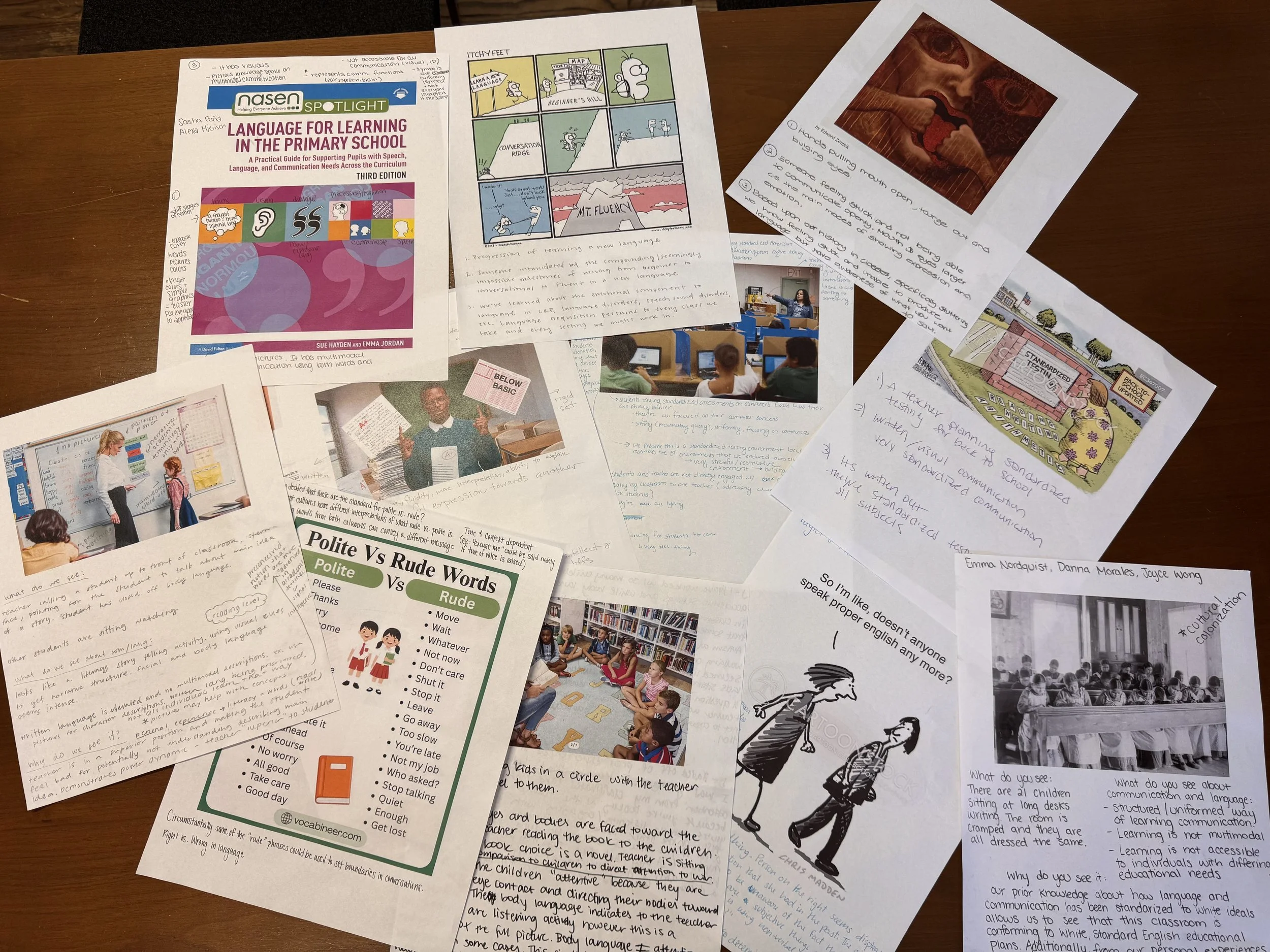
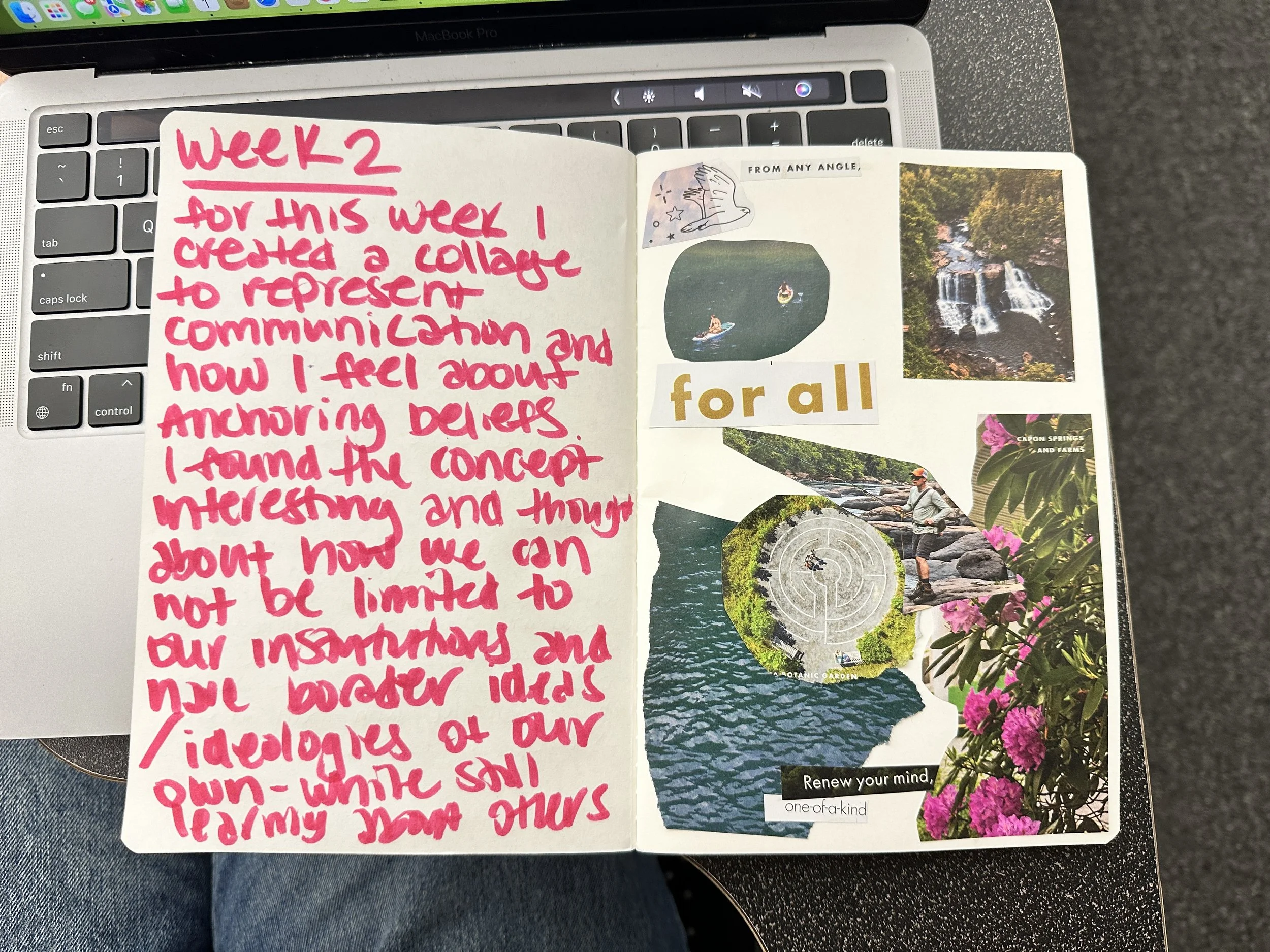
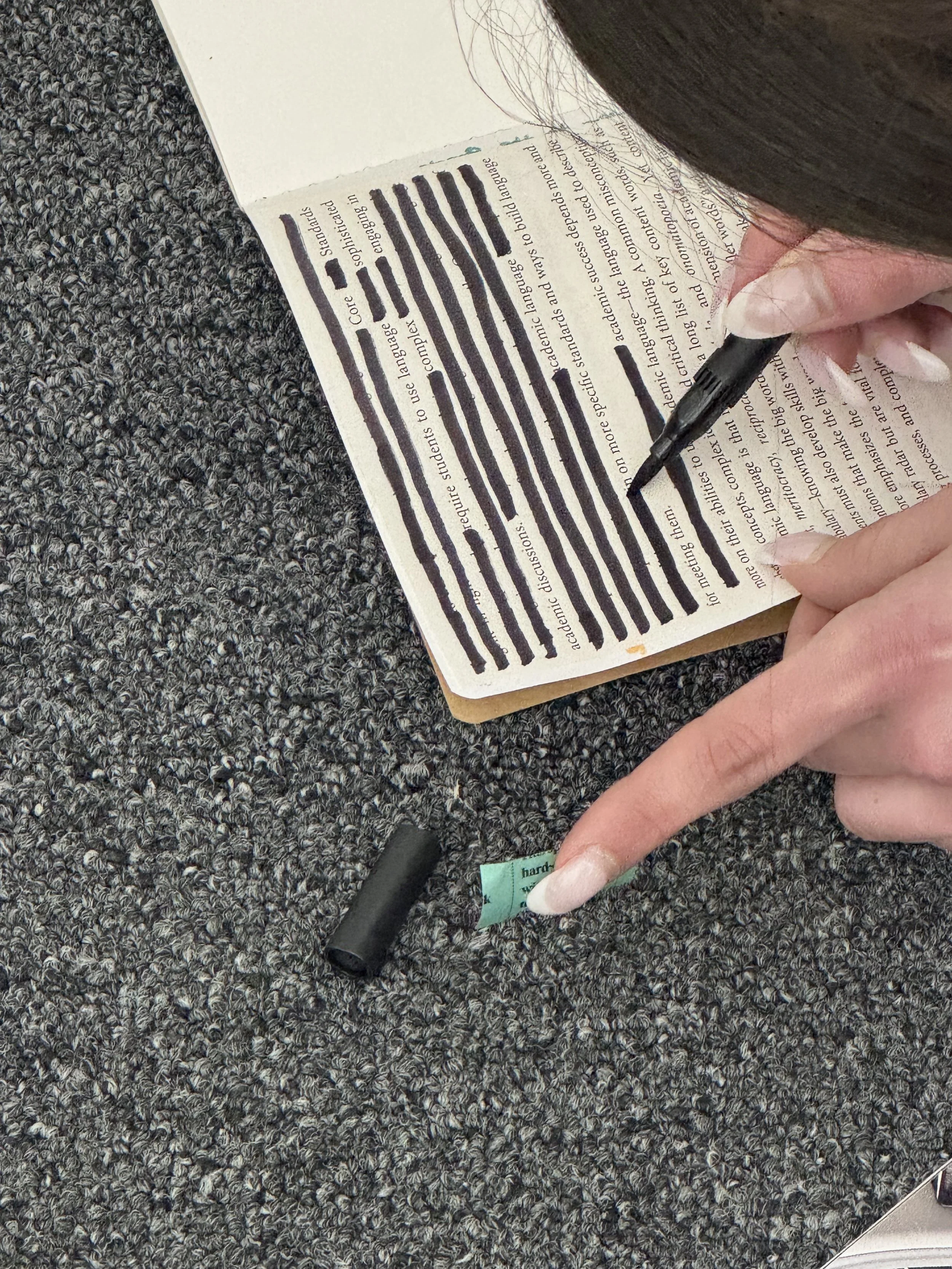
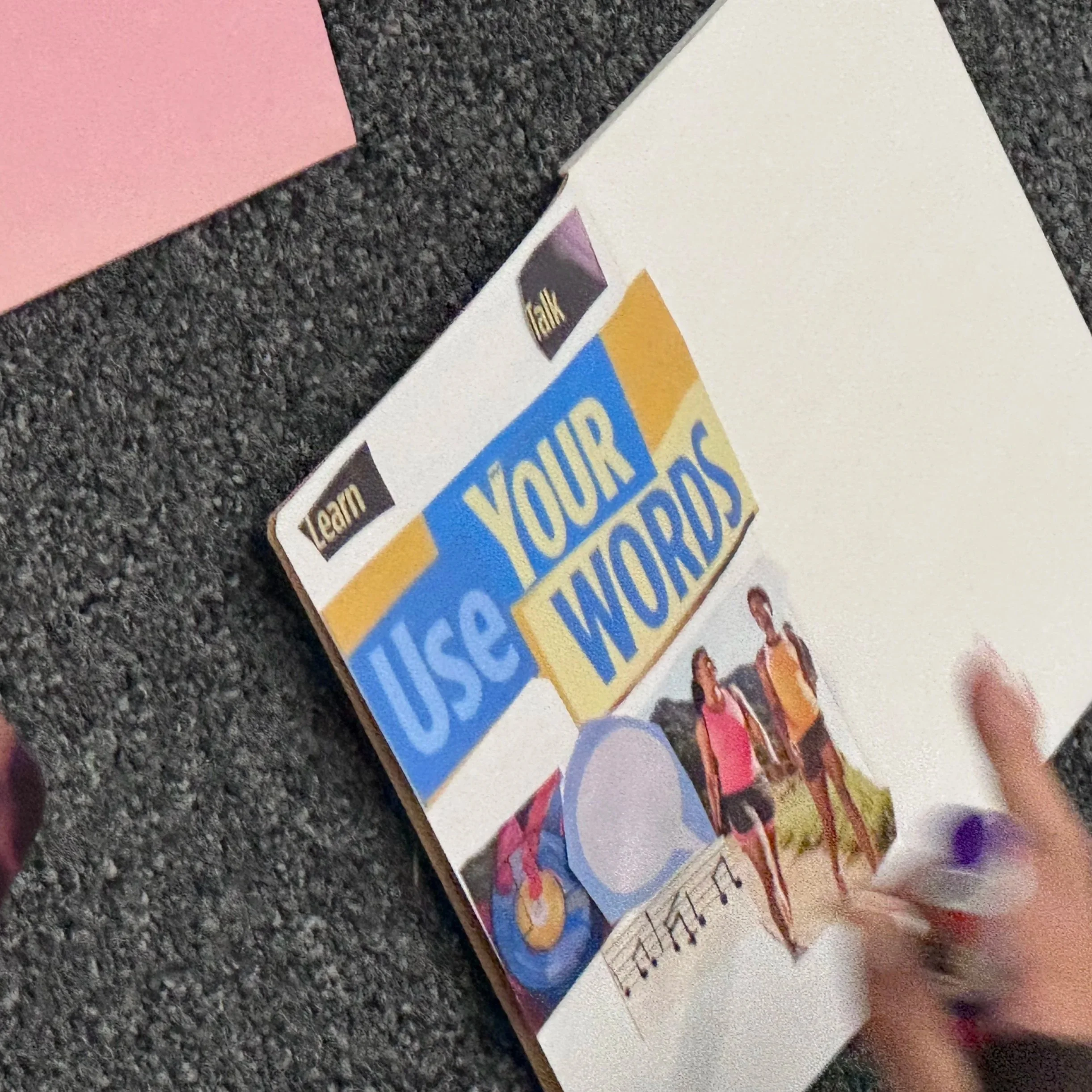
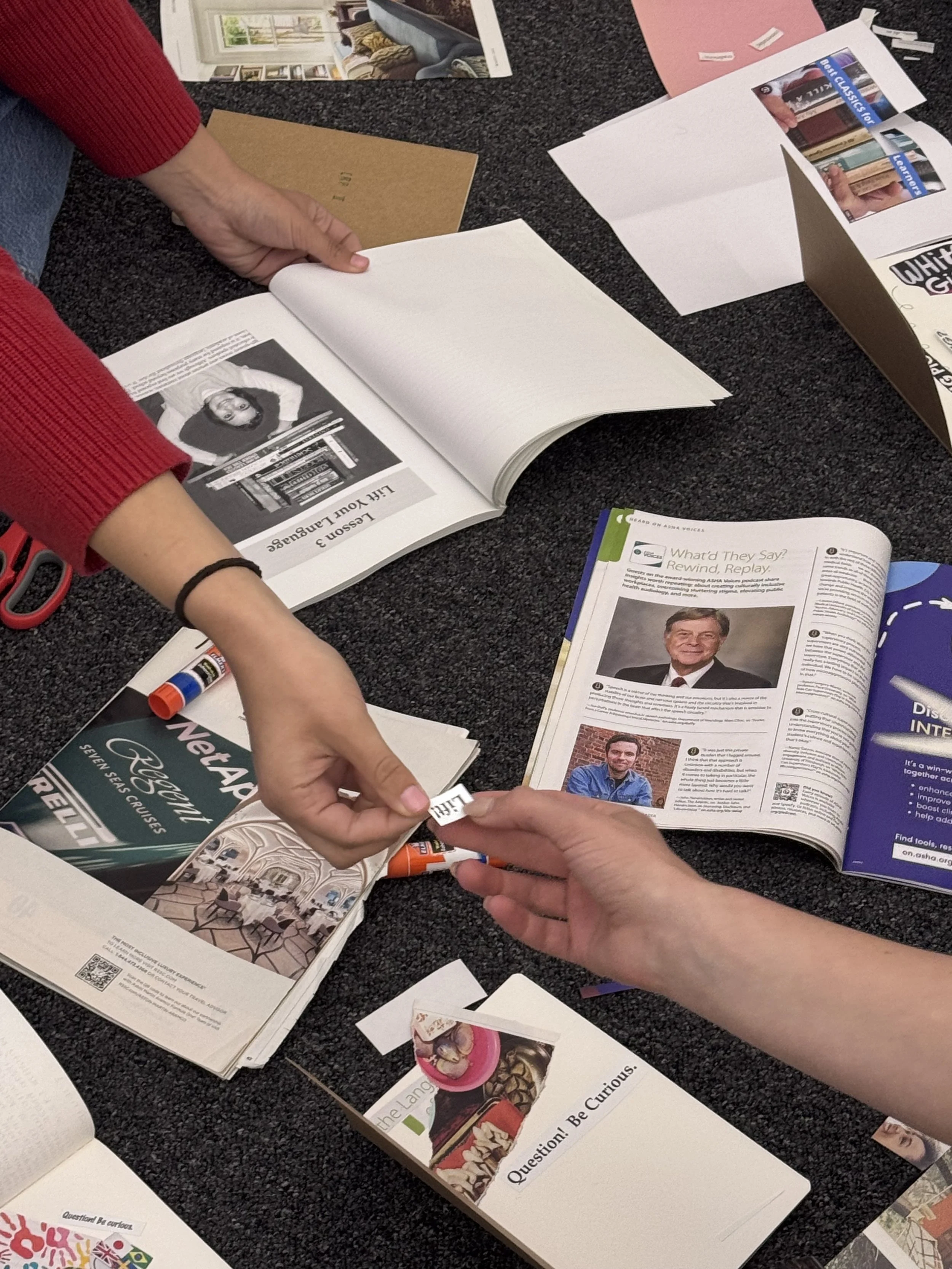
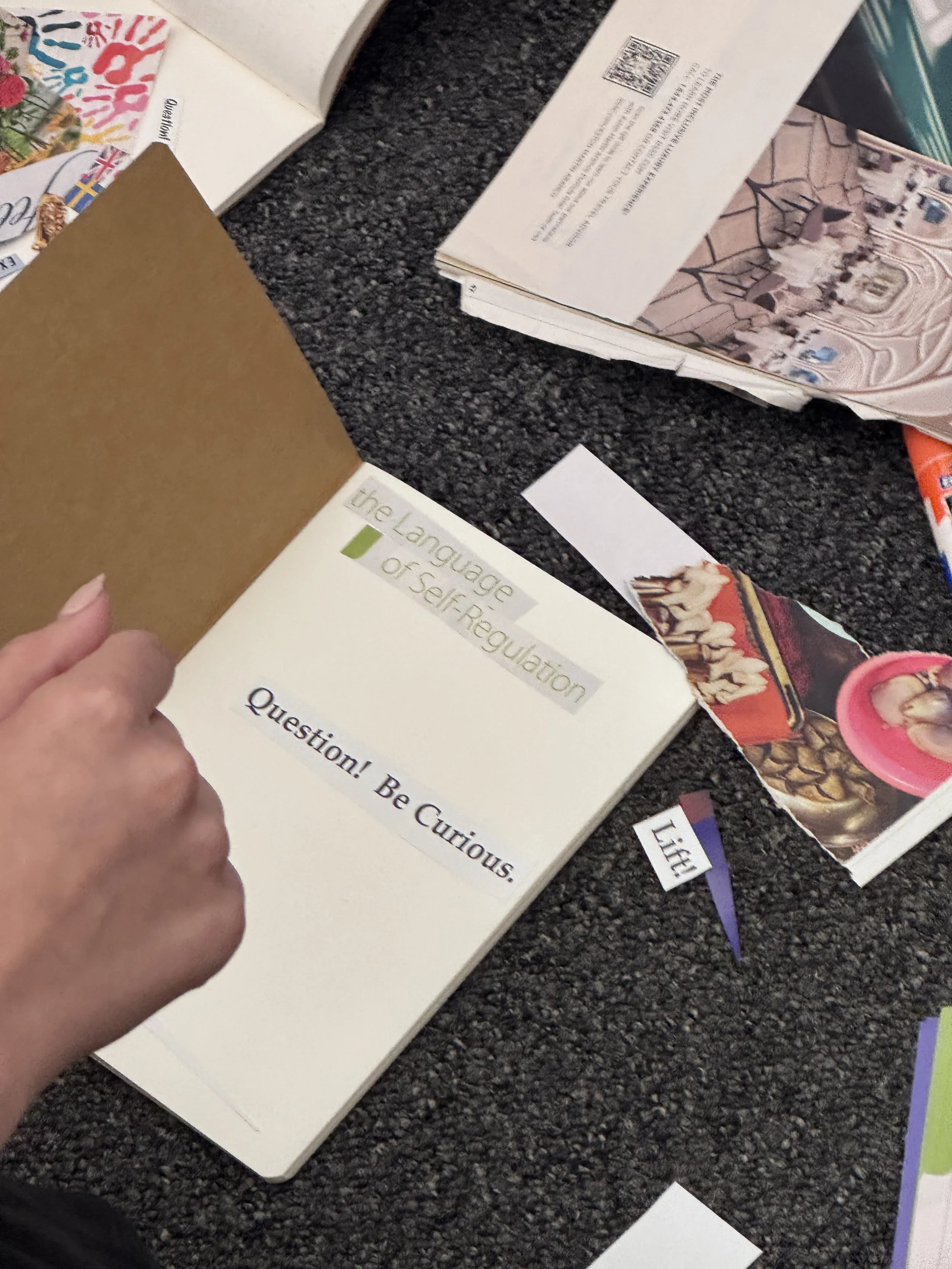
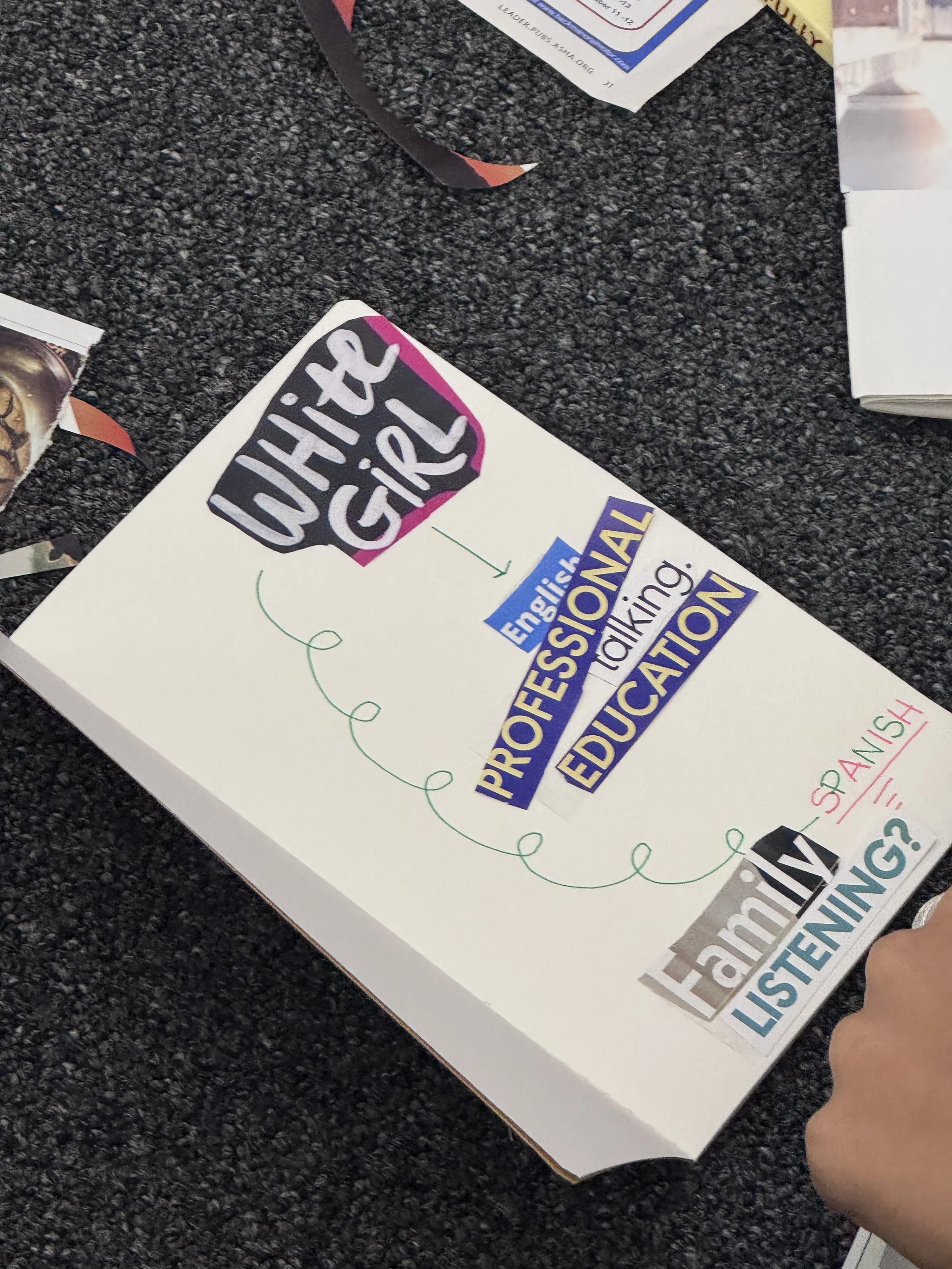
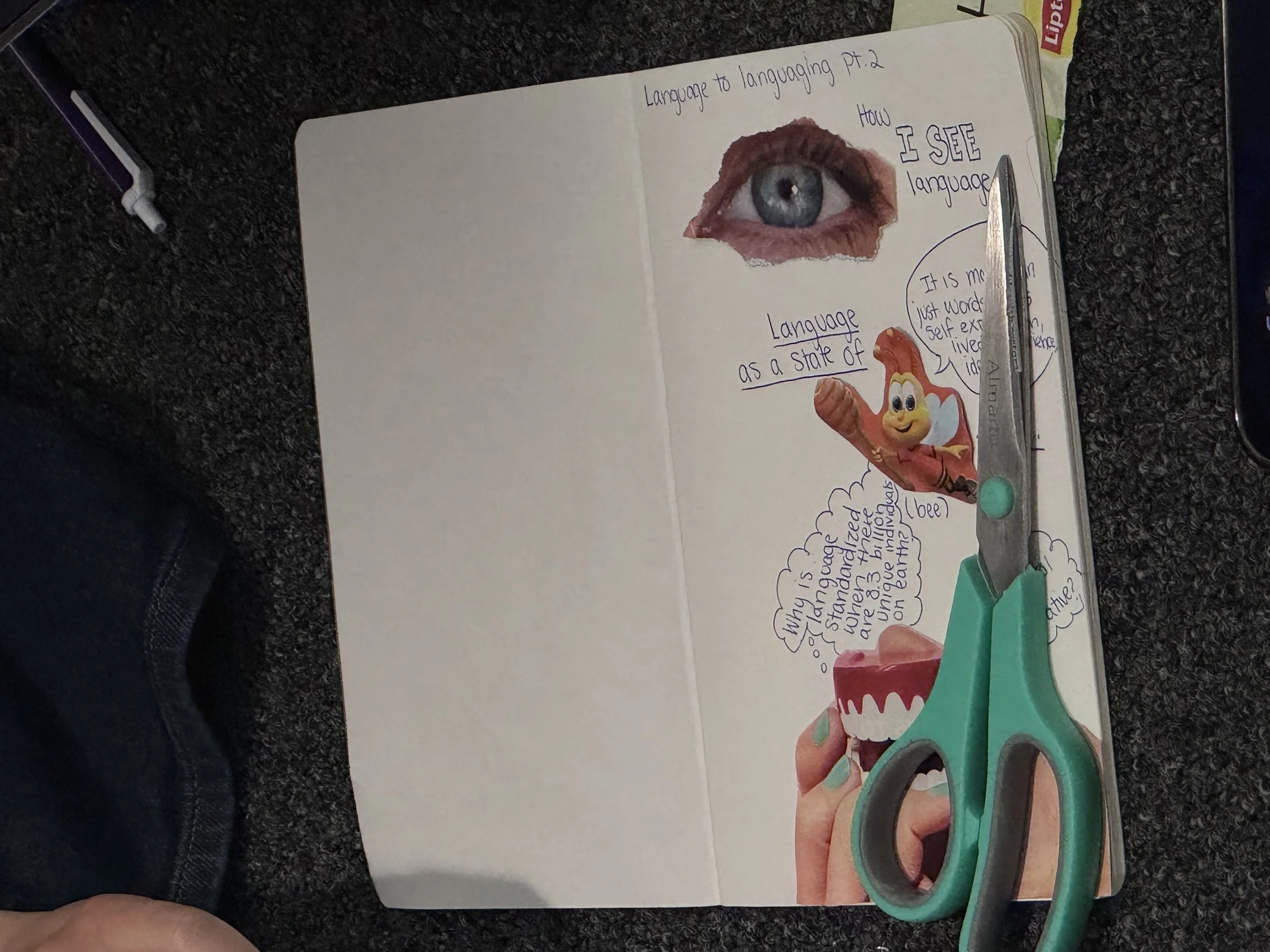
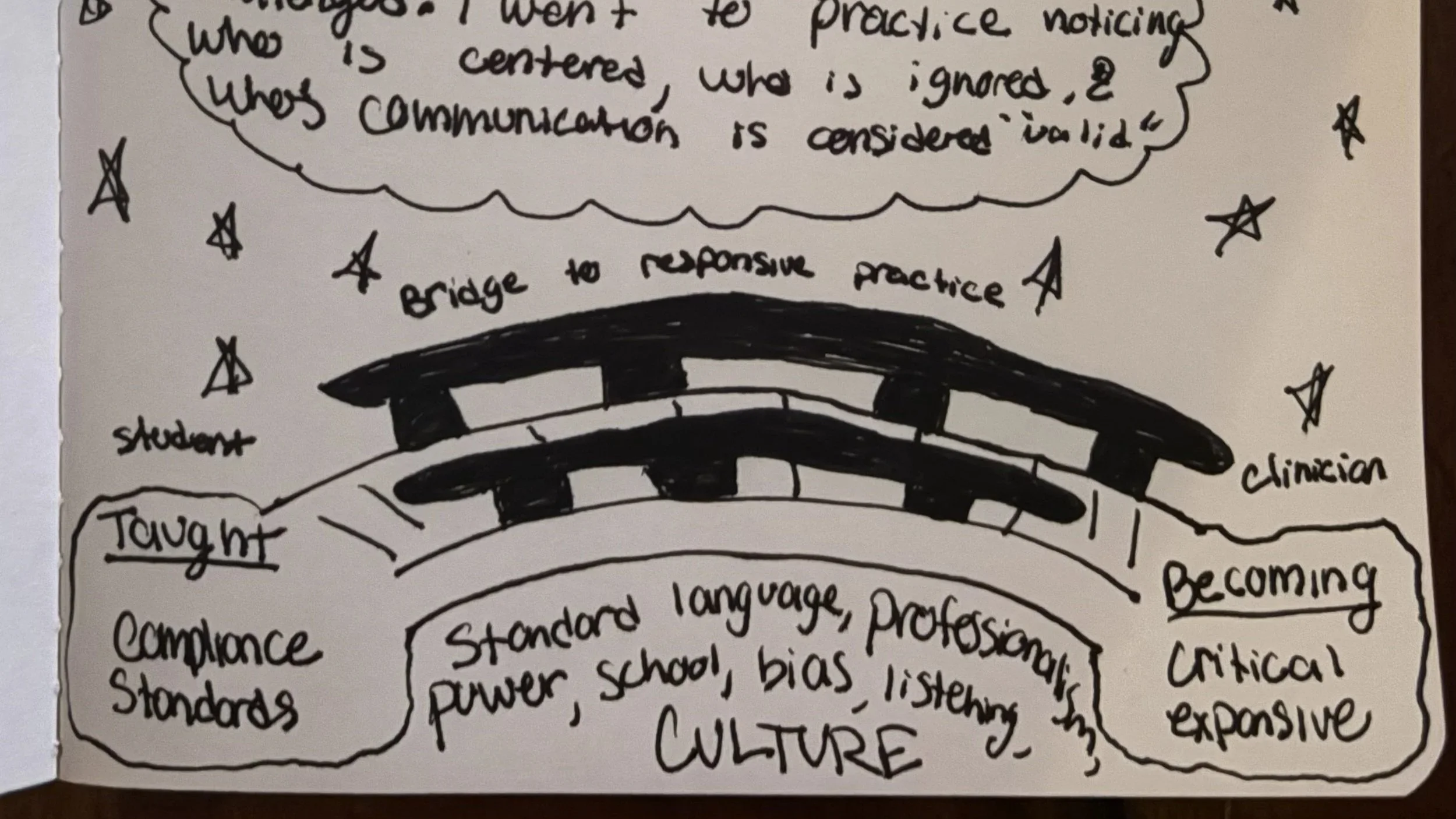
So I’ll leave it there as an intro to our educational project this term. We’ve been implementing (critical) visuality to ‘notice’ / witness/ ‘deeply attend’ our beliefs about communication - first through annotating artifacts and secondly by collaging our definitions of languaging. It’s a beginning to ‘getting back in our bodies’ - both as the bodily practice of using our bodies to communicate through the language of paper and graphic text - and to deeply attending to what our own journeys are unraveling as ideas in our journals. I post below a few photos just as a taste as we explore ‘what we notice’ '‘what is included’ ‘who is not in our internal representation of languaging'. I consider this a teeny move by us all toward a pedagogy that centers ‘resistance-in-place’ - a collection of learning moments that are amorphous to the capitalist value system of the institution (Odell, 2019; p. xvi) and that can accommodate cyclicality and care.
“attention is a state of openness that assumes that there is something new to be seen...it is also true that this state must resist our tendency to declare our observations finished”