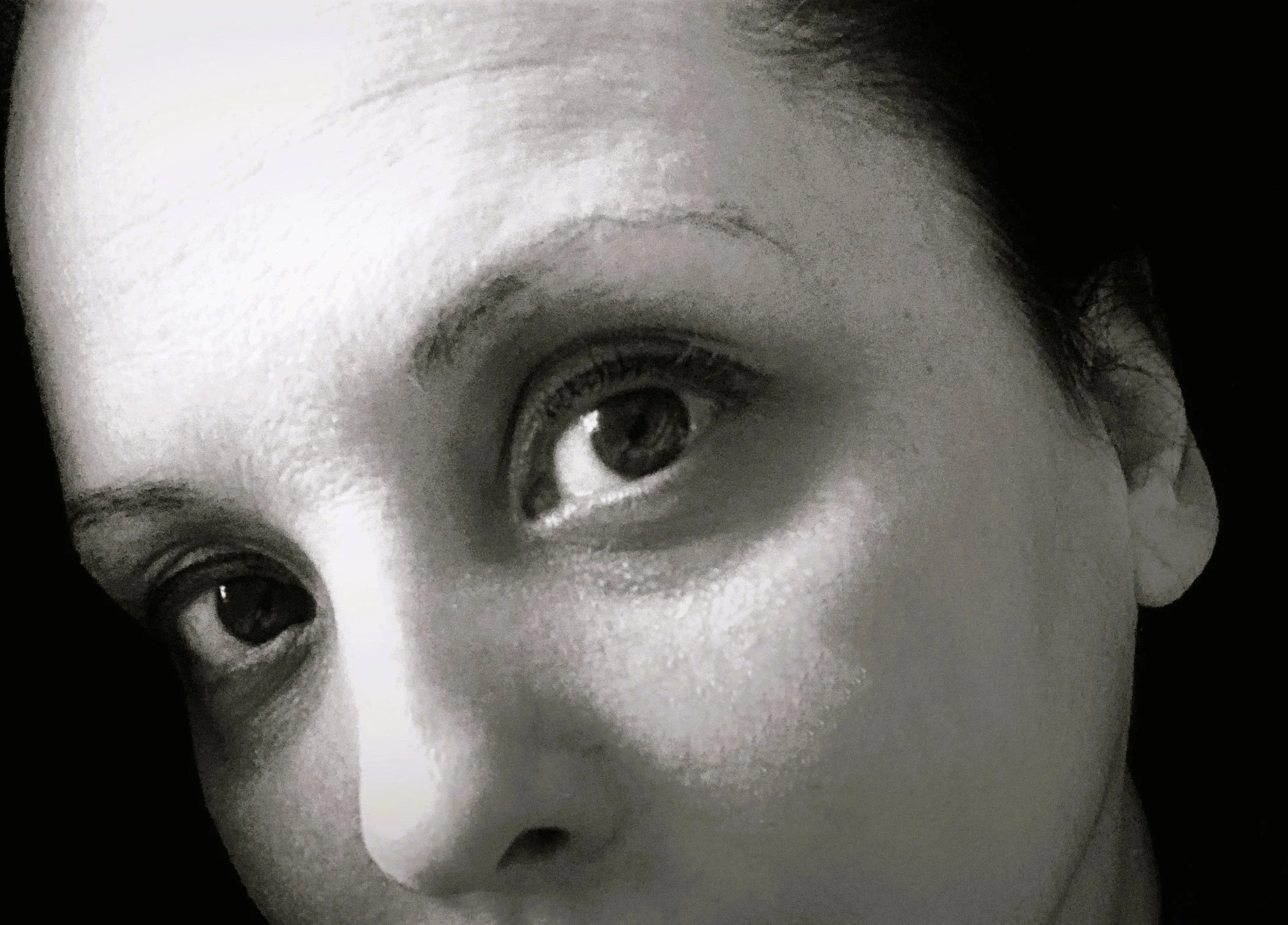
What I’m Learning: “Partir es siempre partirse en dos.”
Many of us relate to the custom or ritual of leaving for a walk around the block with suitcases right before the clock rings midnight on the 31st of every year, the origin of which is unknown, but which, for most of us of Dominican and other Latin American diasporic ways of knowing, represents the notion of “calling in” travel. It speaks to the yearning for exploration of an unknown or little known place and experience.
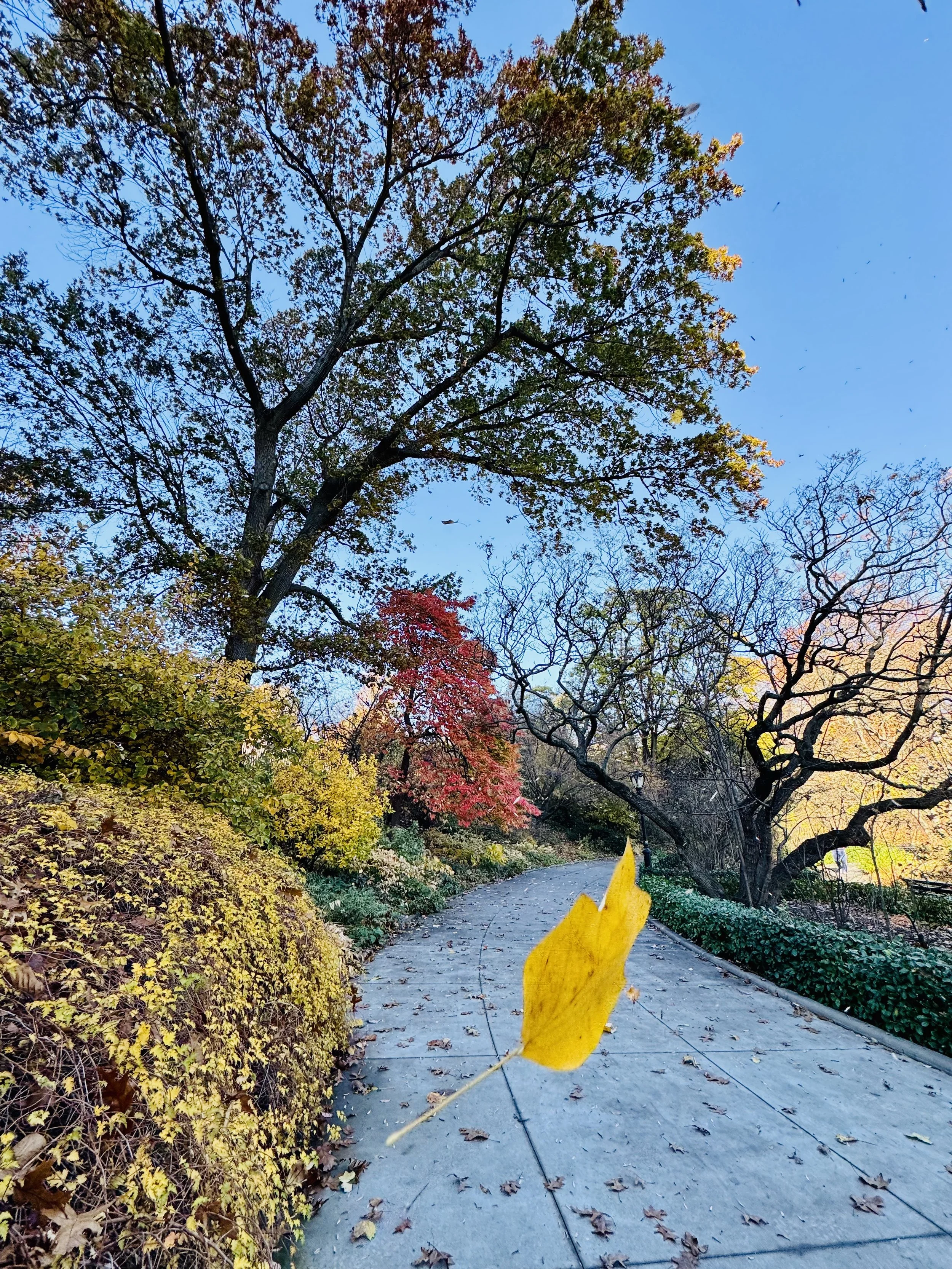
can time be captured or does it capture us?
Central Park, November 16, 2025
I have been thinking a lot about journeying , the illusion of moving ahead (to be distinguished from neoliberal progress) in/with/along human-made time-boundaries. Here, I am reminded of the song by Mecano, “Un Año Más/ one more year”: “ Y en el reloj de antaño, como de año en año/ Cinco minutos más para la cuenta atrás… Uno, dos, tres y cuatro, y empieza otra vez…” which I recently noticed has lyrics performed with a cadence resembling the rhythm of a ticking clock.
And this, too, invites wonderings about “what we are taught to think time is” : is it a finite, (often) hurried, straight or wavy line with a beginning and an end? In this conception, how do we fit the BIG, artistically “messy” notion of time (i.e., “vanishing” time present only when we access our creative energies or hyperfocus in our '“special interests”, “dissonant” time in times of grief, and “unhurried” time as we sit under a tree in summer trying to learn something new from a book). Ah, how do we ensure its sisters, memory, attention, and nostalgia also can be accommodated in the box?
I find it curious that our “actual” embodiment of time is one in which we are travelers, with the trip being characterized (often) as fleeting, uncapturable, and iterative (perhaps ritualistic but never.exactly.the.same) Relatedly, I spent a year reading Jenny Odell (2023)’s “Saving Time: Discovering a Life Beyond the Clock.” The title of this book makes it appear like it may be a self-help book, but it really is a wonderfully subversive, most in-depth study on how time has come to be defined (read here also manipulated, measured, harvested, controlled) as we understand it , a gift of colonial logics and the capitalist machinery. It also includes some poignant, and respectful, accounts of that time thing from the more-than-human, indigenous, and crip epistemological frames. But I digress - Odell mentions that the separation of time from its physical context is scaffolded by the chauvinistic domination of “clock time” - citing Durham Peters’s explanation that “‘o’clock’ means ‘of the clock’” And how this, too erases '“chronodiversity” - as in the rhythms of seeding, blooming, dying, decaying co-existing plants in gardens. Odell asserts “what we think time is, how we think it is shaped affects how we are able to ‘see’ and ‘move’ through it” (p. 270)
“Seeing” or perceiving and moving through it implies that we are not static in boundaries - that we are journeying/ learning with / through “it”. Bear with me because this will have a connection to education in future posts. But, for the time being, these are questions I’ll have come alive in my journal expedition this week:
Who decides the timeline of our journeys?
When do we choose to give in to the itch of exploration?
What paradigms do we leave “behind” and what ways of seeing the world accompany us?
What do we consider learning as we travel our journeys?
And, how is our becoming weaved with our cyclical “parting of ways” and “destined arrivals”?
This notion of “becoming” reminded me of the Uruguayan poet Cristina Peri Rossi, forced to live in exile since 1972 in Barcelona, after a civic-military dictatorship became the establishment in the land that witnessed her birth.
El Viaje
Mi primer viaje
fue el del exilio (…)
Desde entonces
tengo el trauma del viajero
si me quedo en la ciudad me angustio
si me voy
tengo miedo de no poder volver
Tiemblo antes de hacer una maleta
—cuánto pesa lo imprescindible—
A veces preferiría marcharme
El espacio me angustia como a los gatos
Partir
es siempre partirse en dos.
The entire poem is beautiful and evocative of the many ways we are exiled and/ or that we choose to exile ourselves… But the bolded words merit the translation “to part ways always means to become broken into two” This, of course, also alludes to the idea of liminality and the notion that we are holders of “time” - in ourselves - versions of the past, the present, and the imagination of who we are in the fluid, dynamic journey-‘ing’ of (time) as life.
And with clock-time doing its thing, here we welcome another '“journey”/ another exploration, with parts of ourselves in time and space coming along for the ride. May this new invitation to our becoming within time-boundaries be gentle, grounding, and rich in consciousness…
keep on learning,
MR
P.S. - For those wondering, SI! I went out with my suitcase at midnight - because rituals matter to me.
P.S._2 - My new series called ‘what i’m learning’ serves the purpose of integrating what I am reading and practicing the writing craft without being constrained only to what academia dictates is ‘proper’ knowing. Thank you for visiting this space.