What I’m Learning: On “Becoming”
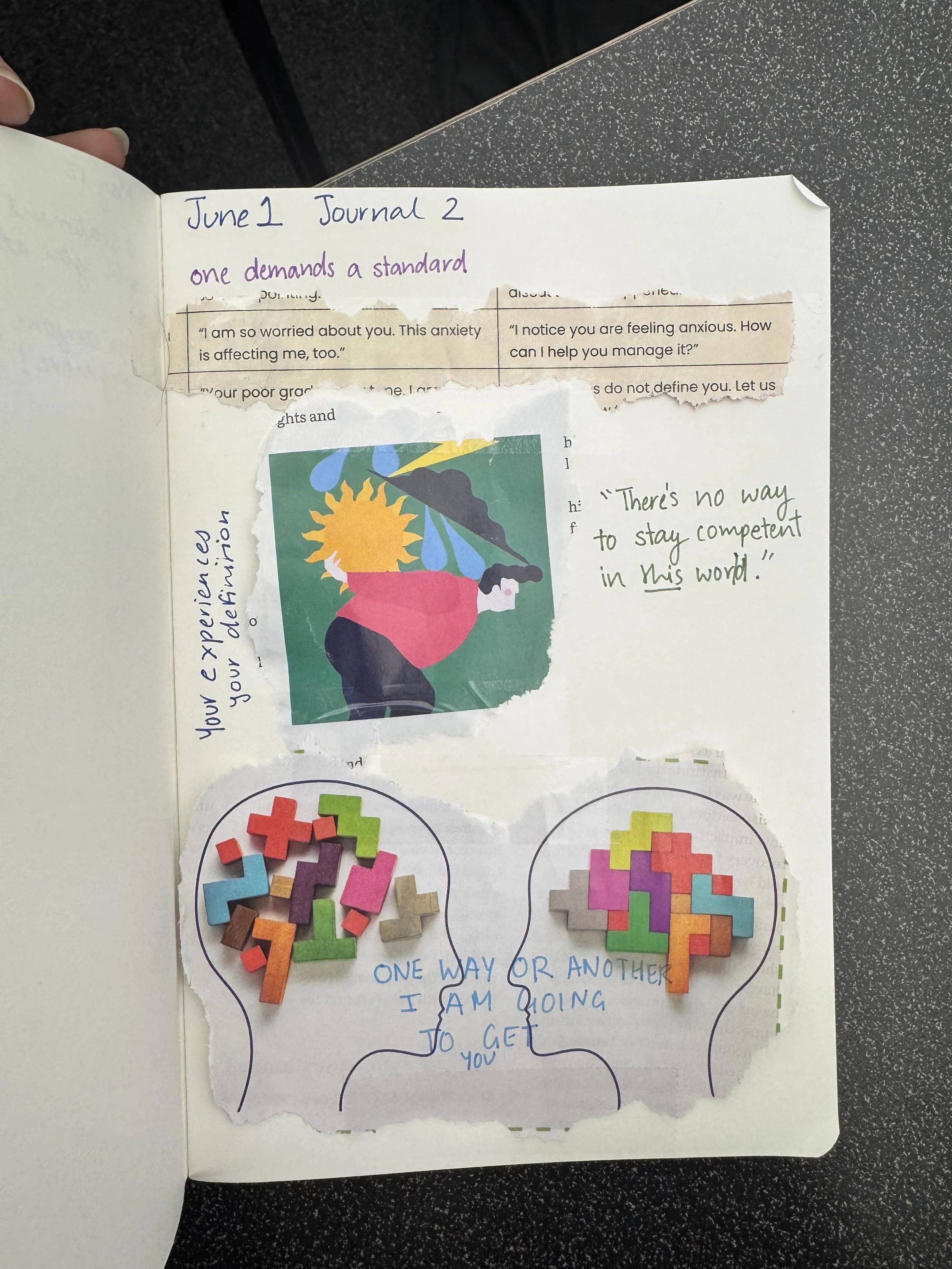
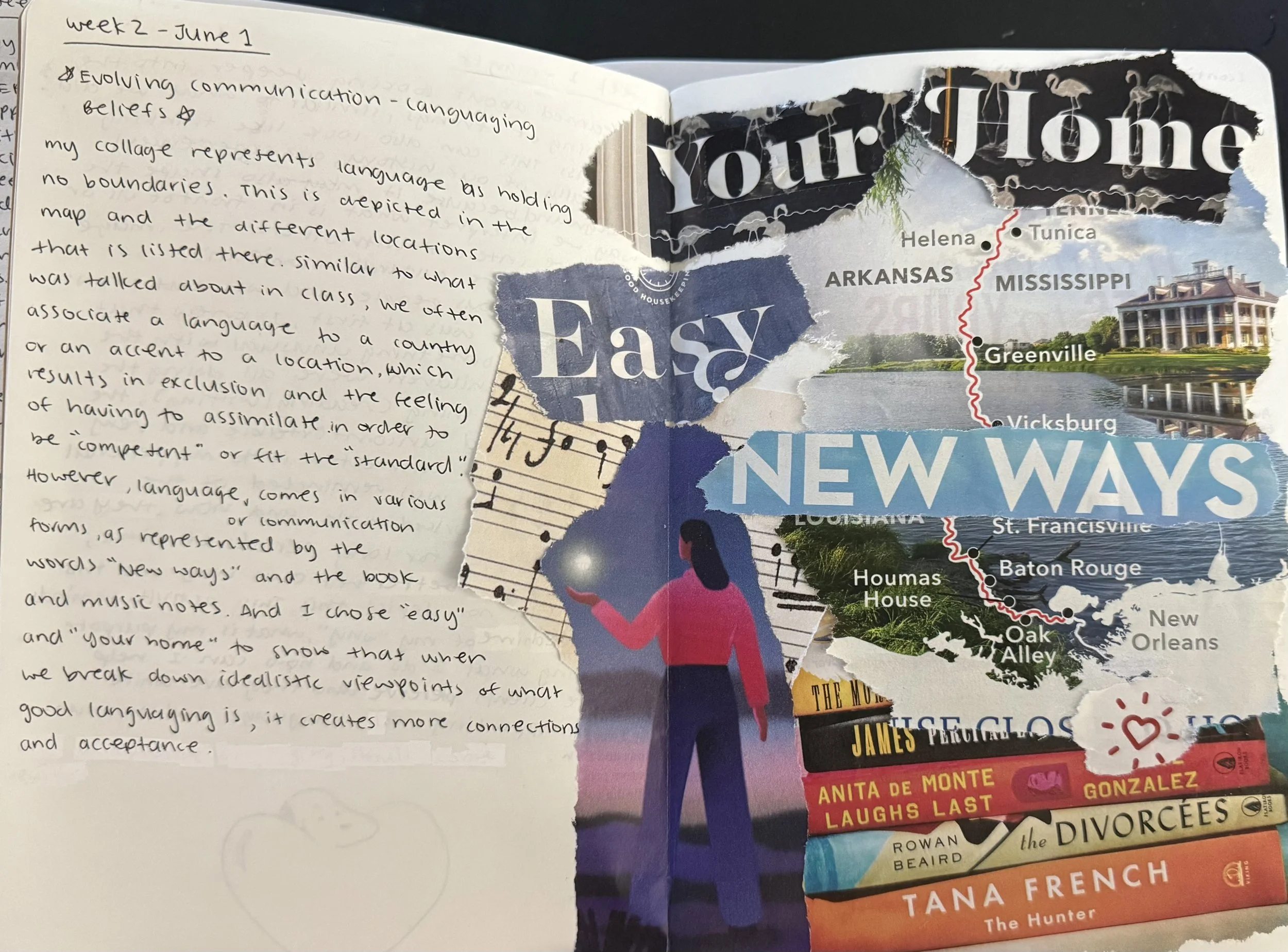
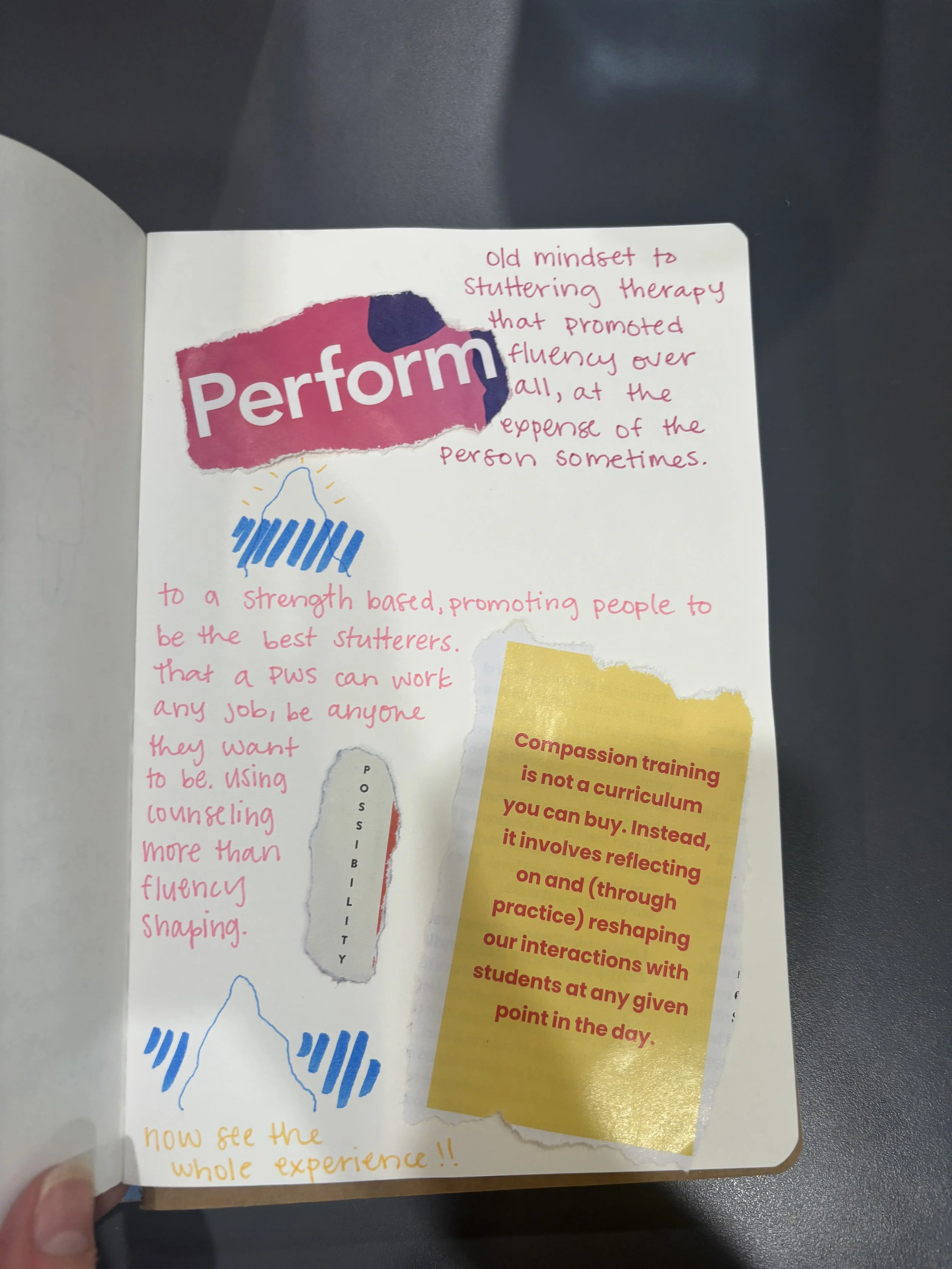
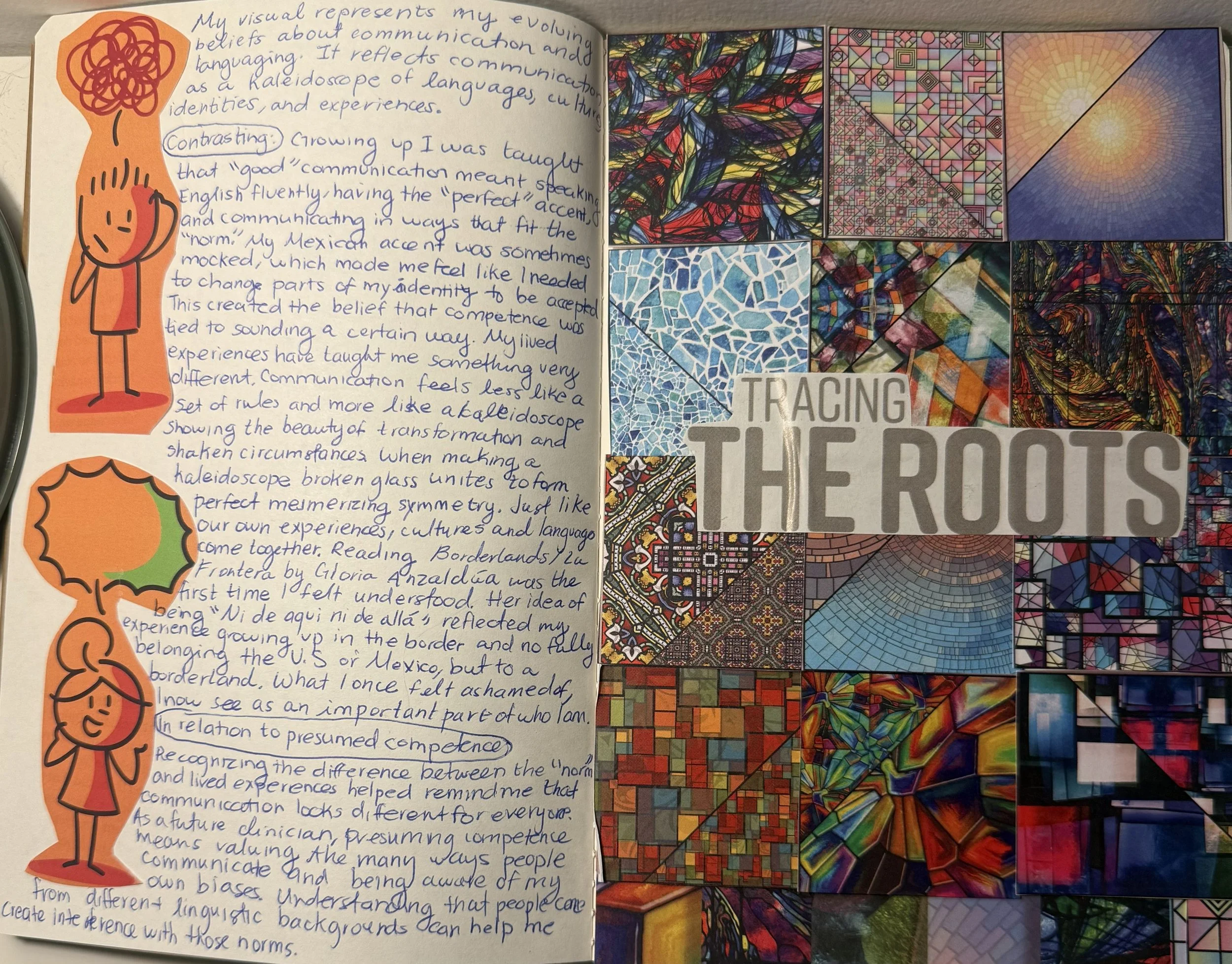
“My glue stick ran out as I was creating this collage, and instead of finding another tube, I decided to keep all of the paper scraps loose, each new layer untethered to the pieces below it. I like to think of my ideas in the same way, ever changing and subject to rearrangement”
It’s being a year of a LOT of change in my life - internal change that nobody is able to notice, yet - but I am certainly feeling already. And being in “it”, the state of hidden flux, made me think a lot about the many ‘lives’ we are experiencing in parallel. It brought me pause and called me to ponder how our many selves also live in our definitions of languaging and how as a discipline we rarely take stock of these evolving beliefs. That brought me to the notion of “reflection” and to (a priori) of our engagements in learning having the disposition to CAREfully and intentionally create offerings for our co-learners to connect with their inner worlds. This summer, particularly, despite having fairly robust classes and not having much of a break at all between terms, I felt it was important for us all to have opportunities to co-build collective explorations about ‘what dwells beneath’ our knowing and how it is in constant re-arrangement, while cocooning these individual experiences at the same time. This should not be confused with ‘using’ students as insiders of their own positionalities; nor is it a way to pile on “counselor” to the roles we already play as minoritized teacher-scholars in the academy. What it is is a realization of the uniqueness of journal writing as a window into what co-learners characterize as their ‘becoming’ in their definitions and learnings of (presumed) competence in communication.
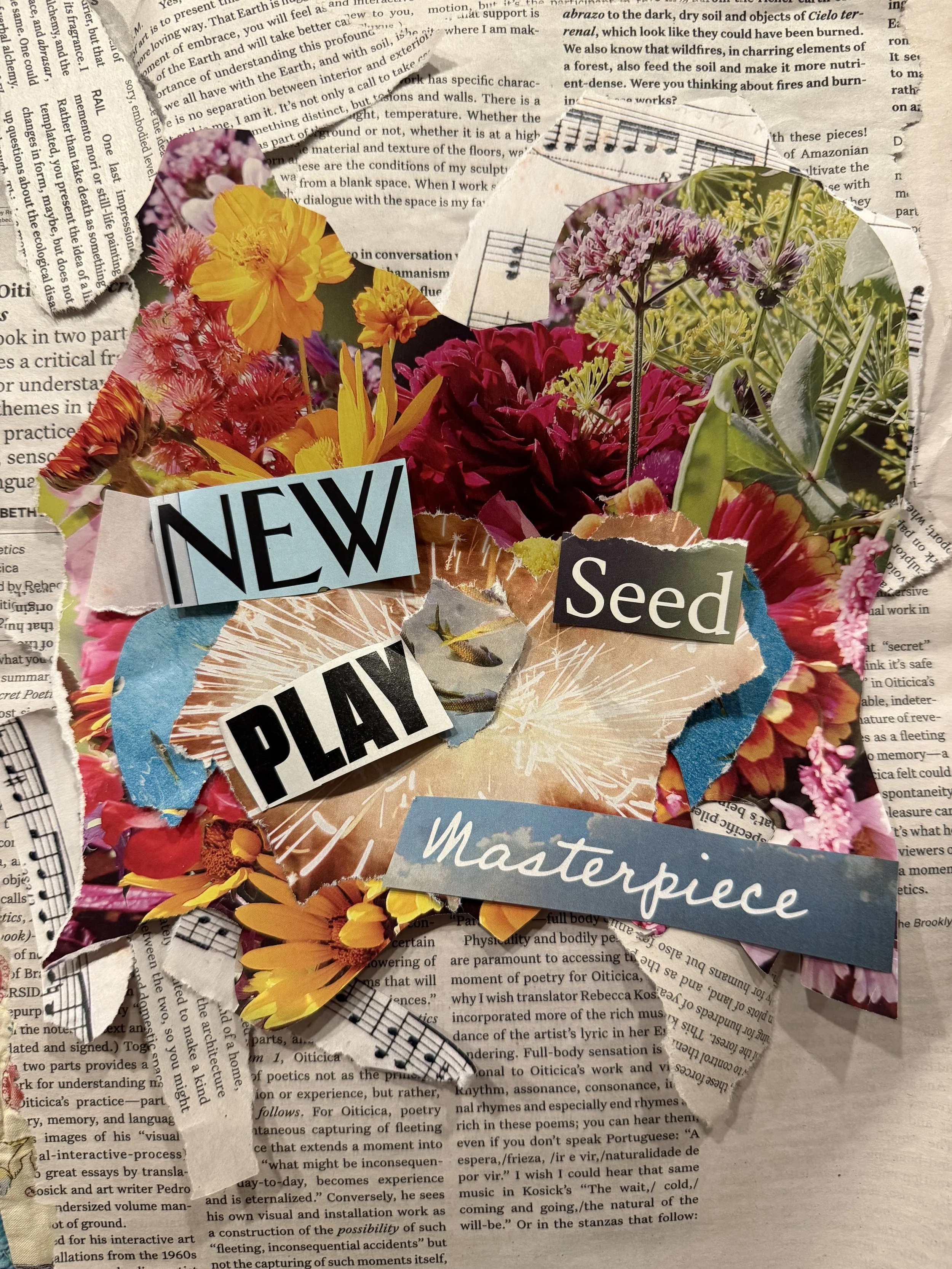
ideas in flux - the becoming.
This brings me to reflection as a form of praxis. hooks’ (1994) engaged pedagogy invites us to consider learning through the wholeness of our embodied selves, recognizing that intellectual knowing is inseparable from the lives and experiences through which that knowing emerges. There is something important here for how we create offerings for reflection: spaces where co-learners can turn inward, sit with what they are coming to know, and determine for themselves what they wish to make visible. Guajardo (2023) extends hooks’ engaged pedagogy through journal writing, describing journaling as a reflective practice that creates space for “learning, unlearning, and relearning” (p. 5). I find this particularly generative for thinking about languaging. If our understandings of languaging are evolving alongside our own evolving selves, the journal can become a place where that knowing is allowed to move. Ideas can be layered, rearranged, revisited, contradicted, or left unfinished. Journal writing has become a real window into what my co-learners wish to share with me about their evolving knowing about and through languaging. There is also something distinctly Reggian for me in this idea of knowing as continually becoming. Within Reggio Emilia, the child is understood as a competent, curious meaning-maker whose knowing is continuously taking shape through encounters with others, materials, places, and ideas (Malaguzzi, 1998; Rinaldi, 2006). Reflection can become part of this process of becoming—a space for sitting with what is emerging, returning to ideas, and allowing for change - for the discomfort of liminality of ideas in our bodies. The journals have given me a way to witness some of that becoming, while respecting that what my co-learners choose to share is only a small part of what is unfolding within them. Perhaps there is something important in recognizing that we only ever have partial access to another person’s becoming - and how sacred it is to be a witness of its ephemeral quality.